Trump’s ableist attack against Governor Gavin Newsom is not just inaccurate, but a gross representation of our society’s wider bias against disabled people’s futures.

Trump’s ableist attack against Governor Gavin Newsom is not just inaccurate, but a gross representation of our society’s wider bias against disabled people’s futures.
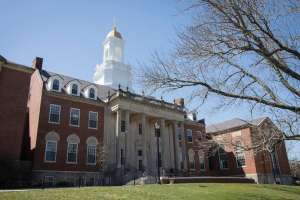
Mia Giancola, a sixth-semester social work and sociology student, and Gabriella DiSalvo, an eighth-semester student with an individualized major of disability studies in media and food culture, have proposed starting the new cultural center to help people like them connect with one another and have a safe space to be themselves on campus, something many Huskies feel is a long time coming.
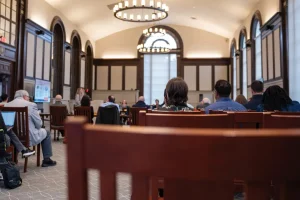
As disability is more than just diagnoses but rather identities and cultures with a rich history of resistance and advocacy via activist movements and self-expression, it would be in UConn’s best interest to listen to the push led by disabled UConn students to establish a disability cultural center to ensure that support for disabled students doesn’t end with accessibility support and other accommodations.

Our systems are built so that certain people are able to live and thrive and certain people aren’t because they don’t deserve it. This deservingness of care permeates everything.

“I was born with a rare neuromuscular condition called myofibrillar myopathy. In super simple terms, it’s a low-muscle tone condition that affects my whole body. Basically, my muscles are a lot weaker than the average person’s. It’s not really possible, or at least it’s much harder, for me to build muscle than it is for a nondisabled person,” DiSalvo says.

For me, being a first-generation, financially independent college student, and facing a rare neuromuscular disease at the age of 20 meant swimming through many storms. DEI initiatives like women-in-STEM mentorship programs, disability advocacy groups, and fellowships for first-generation students were the only reason I could keep swimming. They didn’t guarantee my success. They just helped me stay in the race.